Parliament Heard the Public Defender’s 2025 Report on the State of Human Rights and Freedoms in Georgia
Plenary 23 ივნისი 2026
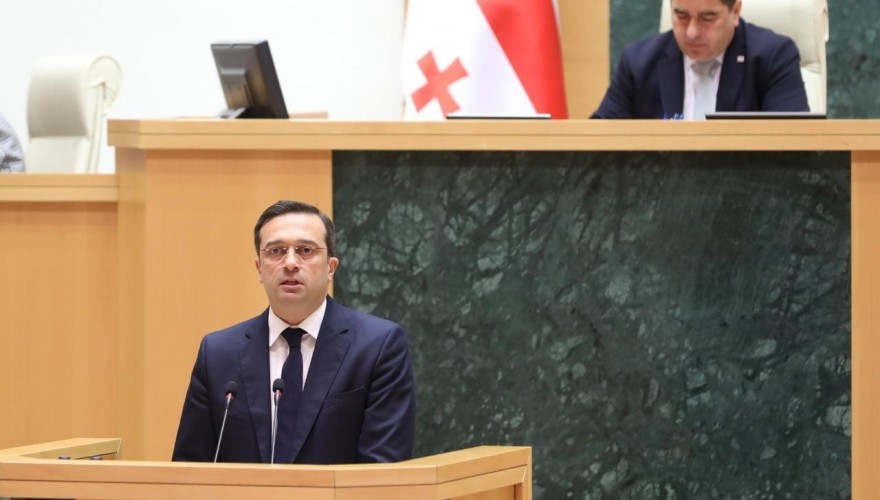
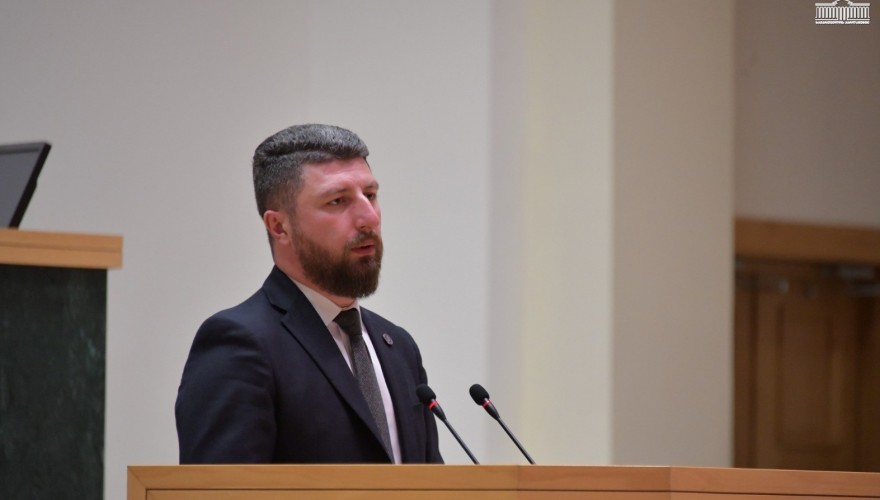
At a plenary sitting, the Public Defender of Georgia, Levan Ioseliani, presented the report on the state of human rights and freedoms in Georgia in 2025.
“During 2025, we initiated the examination of 2,256 cases to assess compliance with human rights standards. In 85 of these cases, human rights violations were identified, and we addressed the relevant state institutions with recommendations aimed at restoring those rights. Notably, in 20 cases, the violated rights were fully restored with our assistance.
The Public Defender’s Office operates a hotline through which citizens can obtain information and report violations of their rights 24 hours a day. During the reporting period, the hotline received 14,756 calls. It is noteworthy that informational and consultative inquiries increased by 33% compared to 2024.
In 2025, the Office prepared 23 special reports, 4 alternative reports for submission to international bodies, 3 constitutional complaints, and 18 amicus curiae opinions”, - Levan Ioseliani stated.
The Ombudsman also spoke about the rights situation of conflict-affected populations, noting that in 2025 they continued to face numerous challenges.
“Unfortunately, violations of property rights remain a daily challenge for residents living near the occupation line. The illegal process of so-called ‘borderization’ by the occupying forces continues. During the reporting year, Russian occupation forces installed more than 60 kilometers of barbed-wire barriers in the direction of occupied Tskhinvali, while the length of artificial barriers in the direction of occupied Abkhazia exceeded 50 kilometers. Another challenge remains the unlawful detention and imprisonment of individuals by the occupation regime on charges of illegally crossing the so-called border, both in the directions of Abkhazia and the Tskhinvali region. According to official data, in 2025, 32 people were detained in the direction of the Tskhinvali region and 40 people in the direction of occupied Abkhazia.
In 2025, 15 Georgian citizens were held in illegal detention in the occupied territories, including 11 in occupied Tskhinvali and 4 in occupied Abkhazia. These statistics demonstrate that, unlike previous years when detainees were usually released after administrative penalties and fines, long-term unlawful detentions have become increasingly frequent.
Access to education in the native language remains one of the most significant challenges in the occupied territories. In all schools in Gali and Akhalgori, teaching in Georgian has been completely prohibited at the primary level, and the Georgian language has been reduced to a foreign language and literature subject. As a result, student numbers continue to decline year by year. As of January 2025, 3,169 students were enrolled in schools in Gali, compared to 3,348 the previous year. In Akhalgori, a total of 38 students were enrolled in 2025, compared to 50 students in 2024”, - Levan Ioseliani noted.
According to the Public Defender, inadequate medical services and infrastructure, the qualifications of medical personnel, and difficulties crossing the so-called checkpoints continue to pose serious challenges in Georgia’s occupied territories. He emphasized that, because of these circumstances, most residents of the occupied regions seek medical treatment outside the occupied territories.
The Public Defender also addressed a wide range of issues, including the right to life; the right to liberty and security; the right to a fair trial; the right to privacy; the prohibition and investigation of torture and other cruel, inhuman, or degrading treatment or punishment; freedom of expression; freedom of assembly; electoral rights; the right to equality; the rights of persons with disabilities; the protection and civic integration of national minorities; the rights of children; and other human rights matters.
During the plenary session, the Public Defender answered questions from Members of Parliament and provided additional explanations regarding the report.