
Working Group Established to Develop Recommendations for Improving the Socio-Economic Conditions of Families with Children Concluded Two-Day sitting in Batumi
Media and Society 30 მაისი 2026
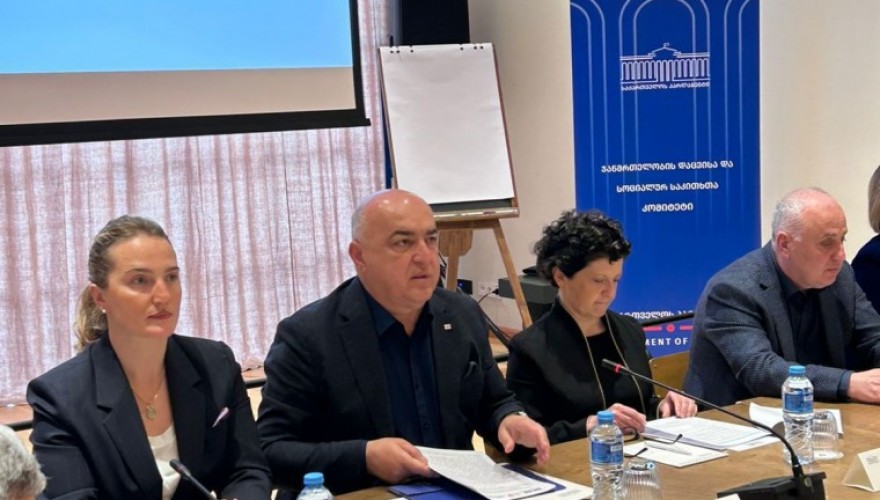
The working group established under the Healthcare and Social Issues Committee to develop recommendations aimed at improving the socio-economic conditions of families with children concluded its two-day working sitting in Batumi.
During the meeting, participants discussed research on women’s reproductive health.
Another topic under consideration was “Care Work in Georgia: Key Findings from the Time Use Survey”.
Particular attention was paid to the role of the social protection system in improving the country’s demographic situation. Discussions also covered parental leave and labor-related policies.
Participants held discussions on the measures necessary to improve the social conditions of families with children.
The off-site meeting of the working group in Batumi was attended by the Chair of the Healthcare and Social Issues Committee, Zaza Lominadze; Vice Speaker of Parliament, Tea Tsulukiani; Chair of the Education, Science and Youth Affairs Committee and Chair of the Interim Parliamentary Commission on Women’s and Children’s Issues, Mariam Lashkhi; as well as Chair of the parliamentary political group “People’s Power”, Dimitri Khundadze.
The meeting was also attended by the Minister of Health and Social Protection of the Ajara AR, Nino Nijaradze.
Within the framework of the working group on improving the socio-economic conditions of families with children, various aspects of demographic sustainability are being examined, including migration, labor market participation, family support, health, education, and regional development.
Through regular consultations and cross-sectoral cooperation, the group contributes to identifying practical solutions, strengthening institutional coordination, and developing a shared, sustainable, and long-term vision for addressing Georgia’s demographic challenges.