
Agriculture Committee Reviewed International Agreement and Ratification Documents
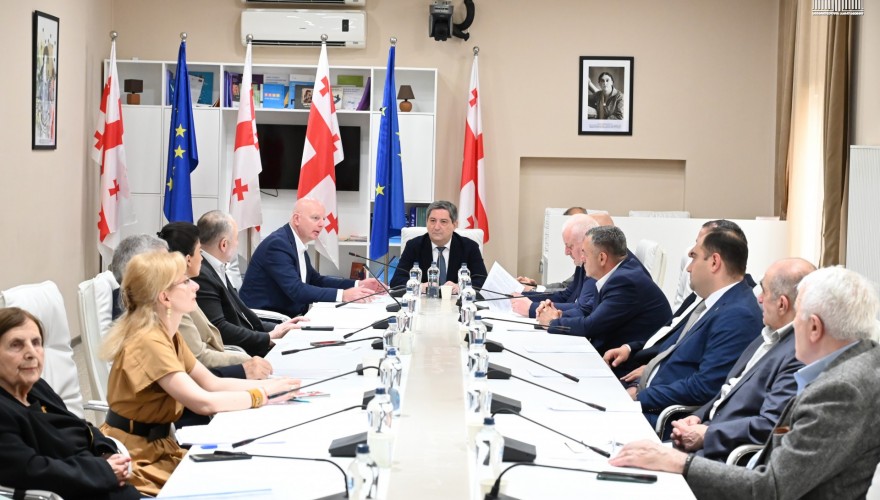
The Agriculture Committee discussed the Decision of 25 June 2024 of the Council of Members of the International Olive Council regarding the amendment to Article 36 of the 2015 International Agreement on Olive Oil and Table Olives. The issue was presented to committee members by Deputy Environmental Protection and Agriculture Minister Zurab Ezugbaia.
The amendment provides for the extension of the validity of the 2015 International Agreement until 31 December 2026.
According to Zurab Ezugbaia, Georgia joined this international platform several years ago. He noted that membership in the agreement enables Georgia to participate in decision-making processes, gain access to sectoral information and international best practices, develop cooperation with partner countries, and benefit from the various opportunities and advantages the agreement offers to olive-producing countries.
As stated by the Chair of the Agriculture Committee, Gela Samkharauli, olive production in Georgia has significant development potential. According to him, olive orchards have already been established on approximately 4,000 hectares across the country. He emphasized that the Environmental Protection and Agriculture Ministry’s “Plant the Future” program has made a substantial contribution to the development of the sector through co-financing the establishment of olive plantations.
The committee also reviewed the Protocol on Amendments to the Free Trade Agreement between the Government of Georgia and the Government of the People’s Republic of China, submitted by the Government of Georgia for ratification.
The issue was presented by Deputy Economy and Sustainable Development Minister Genadi Arveladze.
According to the presenter, the document introduces amendments to the 2017 Free Trade Agreement between Georgia and China, with the aim of aligning the agreement with modern economic realities and deepening economic cooperation between the two countries.
The amendments update the chapter on Sanitary and Phytosanitary Measures, including the establishment of a specialized subcommittee to facilitate information exchange, address technical issues promptly, and reduce trade barriers. The Deputy Minister noted that this change is particularly important for the agriculture and food sectors.
Genadi Arveladze further explained that the provisions concerning Technical Barriers to Trade will also be updated, strengthening cooperation in the areas of standards, conformity assessment, and regulation, while facilitating Georgian products’ access to the Chinese market.
The agreement will additionally include two new chapters: Investment and Electronic Commerce. The investment chapter aims to promote foreign direct investment and create a more predictable and transparent environment for investors. The electronic commerce chapter seeks to support the development of the digital economy, reduce barriers to online trade, and create new opportunities, particularly for small and medium-sized enterprises.
According to the Deputy Minister, these changes will significantly contribute to strengthening the economic partnership between Georgia and China.
During the committee meeting, a working group also discussed matters related to the preparation and submission of the nomination “Traditional Beer Brewing Method in the Mountainous Regions of Georgia” for inclusion in UNESCO’s Representative List of the Intangible Cultural Heritage of Humanity. Together with representatives of relevant state institutions, working group members reviewed the next stages of the initiative and future directions for its implementation.
The Agriculture Committee supported all issues discussed during the meeting.