The Legal Issues Committee approved the draft Criminal Code in the I Reading
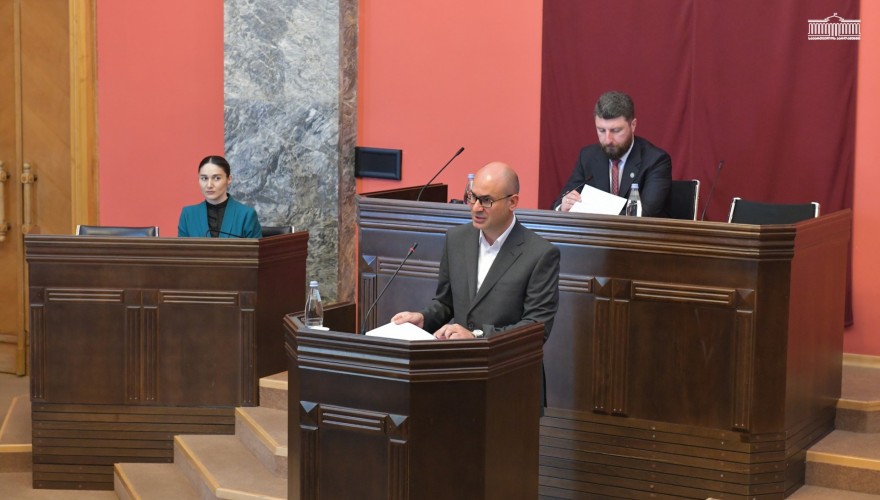
The Legal Issues Committee reviewed, under an expedited procedure, and approved in the I reading amendments to the Criminal Code concerning matters related to public procurement.
According to the presenter, Parliamentary Secretary of the Government, Vakhtang Bachiashvili, the current provision defines as a criminal offense, and therefore criminalizes, prior agreements between participants in procurement procedures provided for by the Law on State Procurement, aimed at obtaining material benefit for themselves or others, where such conduct causes substantial damage to the lawful interests of the procuring organization.
He noted that the existing provision limits the scope of offenders only to entities participating in procurement procedures and does not cover situations where, during the market research stage, individuals may not yet hold the status of procurement participants but still enter into such agreements, thereby harming the lawful interests of the procuring organization.
According to the draft law, the relevant article of the Code has been reformulated as follows: “In relation to public procurement (including during market research and the conclusion of a simplified procurement contract), prior agreement, collusion and/or other actions by persons aimed at obtaining material gain or advantage for themselves or others, which results in substantial damage to the lawful interests of the procuring organization, shall be punishable by a fine, house arrest for a term of six months to two years, and/or imprisonment for up to two years”.
As Vakhtang Bachiashvili explained, in this case, the term “person” does not include a public official, since in such circumstances the relevant provisions concerning official misconduct would apply.
According to him, the proposed amendment will make it possible to impose criminal liability on individuals whose actions violate the lawful interests of a procuring organization and consequently result in the irrational spending of budgetary funds or other damage to state property.