Healthcare and Social Issues Committee Reviewed the 2025 State Budget Execution Report
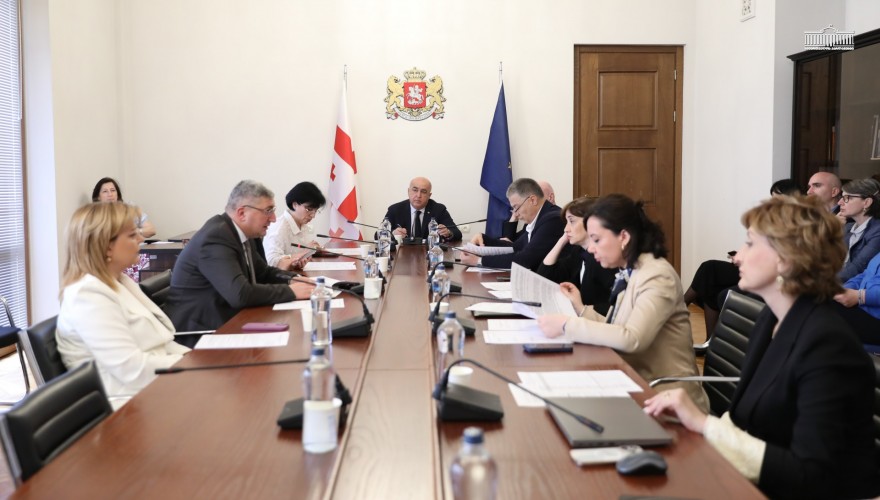
The Parliament’s Healthcare and Social Issues Committee reviewed the Government’s Annual Report on the Execution of Georgia’s 2025 State Budget.
According to the presenter, Georgia’s real economic growth rate reached 7.5% in 2025. GDP amounted to GEL 104.598 billion in nominal terms, equivalent to GEL 28,235 per capita. The average annual inflation rate stood at 4%.
The presenter discussed the key drivers of economic growth, noting that the external sector played a significant role in this regard.
According to Giorgi Kakauridze, compared to 2024, foreign trade turnover increased by 10.3%, reaching USD 25.863 billion.
The presenter reported that consolidated budget revenues were executed at 100.7%, exceeding GEL 28.468 billion. State budget revenues also exceeded the planned target, reaching 100.8% of the forecast. As for expenditures, execution amounted to 99.2%, totaling GEL 27.723 billion in nominal terms.
The presenter also reviewed the utilization of allocated funds by spending agencies, noting that execution rates were generally consistent across institutions, ranging from 95% to 100%.
According to Giorgi Kakauridze, the IDPs, Labour, Health and Social Affairs Ministry achieved an execution rate of 100.3%, spending more than GEL 8.976 billion. Of this amount: GEL 6.327 billion was allocated to social programmes, with an execution rate of 100%; GEL 2.154 billion was spent on healthcare programmes, representing 100.7% execution; GEL 108.979 million was utilized for employment system programmes, achieving 99.9% execution; Nearly GEL 246 million was allocated to programmes supporting internally displaced persons and migrants, with an execution rate of 99.8%.
During the committee meeting, members also considered, in its II reading, the draft law introduced by the Government of Georgia on Adoption and Foster Care.
The draft legislation was presented by Irine Tsakadze, Deputy IDPs, Labour, Health and Social Affairs Minister.
According to the proposed amendments, the list of documents reflecting the socio-economic status of prospective adoptive parents, as well as the conditions for submitting such documentation, will be determined by an order of the Minister. These documents will confirm the existence of a stable family environment and the conditions necessary for the proper upbringing and development of a child.
At the initial stage of the adoption process—when a prospective adoptive parent is registered in the database—and subsequently when consent is given to adopt a proposed child, the documentation established by ministerial order will make it possible to assess the stability of the prospective adopter’s socio-economic situation. Together with other relevant factors, this assessment will serve the primary objective of safeguarding the best interests of the child.
The draft law also includes transitional provisions governing the application of the new approach to individuals who are already registered in the adoption registry at the time the amendments enter into force.
As the presenter noted, no changes were introduced to the draft following its first reading.