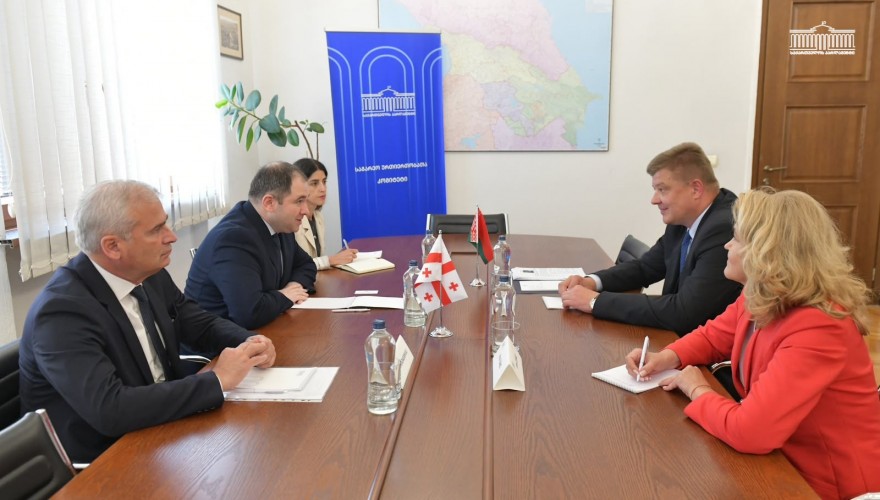
Budget and Finance Committee Supported the draft Organic Law on the State Audit Office
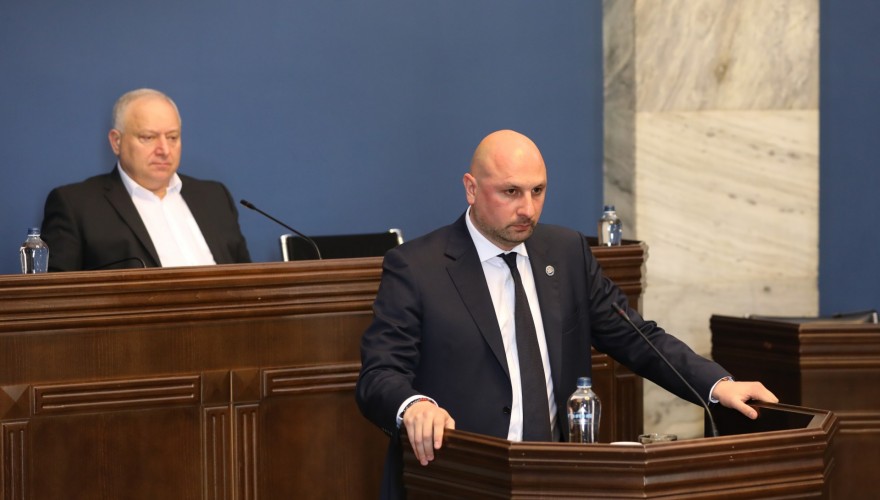
The Budget and Finance Committee considered, under the expedited procedure and at I reading, the draft Organic Law on the State Audit Office, together with related draft laws, and supported the proposed changes.
The amendments concern the organization of the State Audit Office’s activities, the exercise of its auditing powers, and regulations governing its internal administration.
According to the presenter, First Deputy Chair of the Committee Irakli Kheladze, the draft law clarifies that financial, compliance, and performance audits may include the examination of ongoing and/or completed activities.
He further noted that the definition section of the law is supplemented with a specification of the categories of persons considered employees of the State Audit Office. In addition, the position of Secretary for Public Relations is introduced as the official representative of the Office, responsible—upon the instruction of the Auditor General—for communication with other institutions and organizations.
“The Auditor General will have the authority to assign this function to a designated employee of the State Audit Office. It is important to note that this position will not require any additional financial expenditure.
To ensure the efficient conduct of its activities, the State Audit Office will be granted access to and the authority to process electronic databases of relevant administrative bodies on the basis of memoranda concluded with those institutions. The powers of the Presidium are also being clarified. In addition to its current function of reviewing complaints, the Presidium may also consider other matters determined by the Auditor General”, - the presenter stated.
According to Irakli Kheladze, the powers of the State Audit Office are also being expanded.
“Until now, the Office has audited all state institutions except regulatory authorities. Under the proposed amendments, the Communications Commission and the Georgian National Energy and Water Supply Regulatory Commission (GNERC) will also become subject to audit. Their audits will be conducted according to the same principles currently applied to the audit of the National Bank. It is important to emphasize that the audits will be limited to administrative and capital expenditures, and the State Audit Office will not interfere with the decisions of the regulators”, - he noted.
He further explained that the draft law clarifies the powers of audit officials. Specifically, auditors will be authorized to request information related to public procurement directly from participants in procurement procedures. The fine for failing to provide documentation or for submitting false information will increase from GEL 1,000 to GEL 5,000.
“As a result of the amendments adopted in December 2025, the functions of the Personal Data Protection Service and the Anti-Corruption Bureau were transferred to the State Audit Office in March 2026. Consequently, it became necessary to clarify and specify certain issues. In addition, several technical amendments were required to strengthen the effectiveness of audit oversight over the management of budgetary resources”, - he elucidated